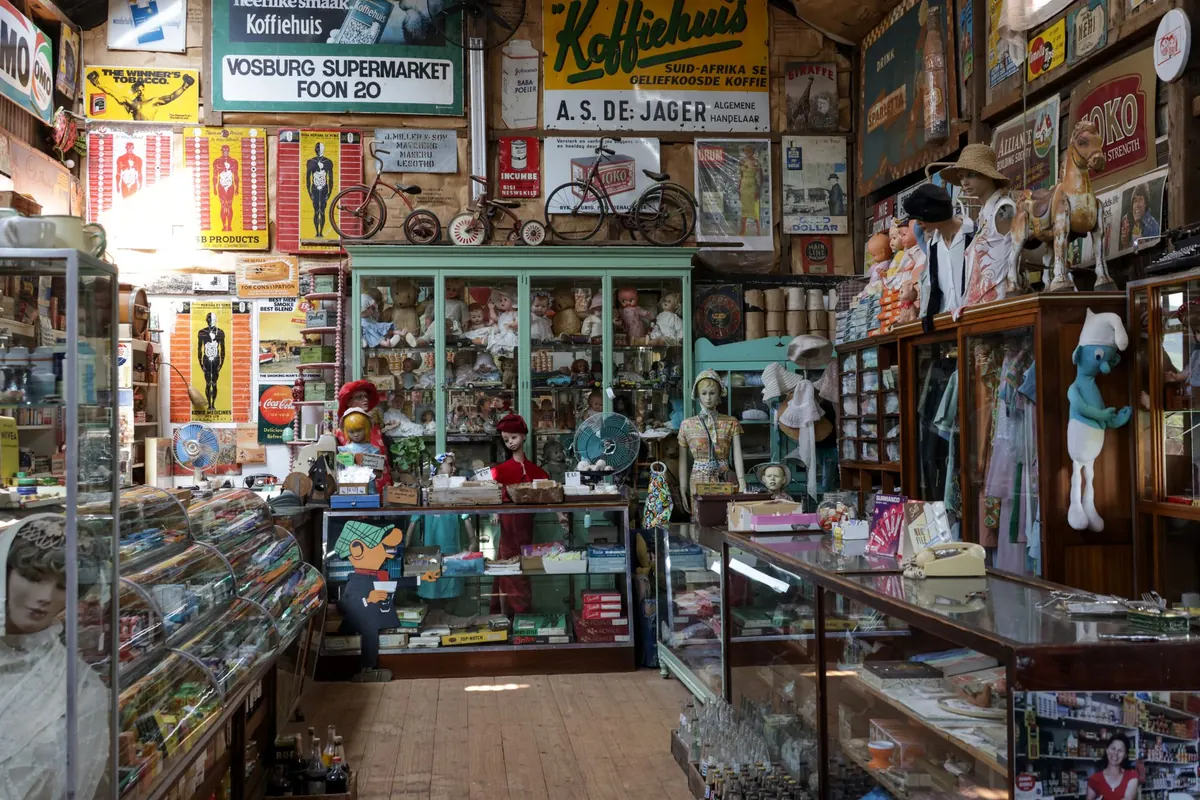
Autumn suits antique fairs better than any other season. The summer crowds have thinned, dealers are clearing stock before winter, and a cold morning in a marquee tends to make people keen to do business. It is also the time of year when house clearances come to market, so the mix on the trestle tables is broader and stranger than in spring. Go with a plan, enough cash and a little patience, and you will come home with something better than you expected.
Before You Go
Fairs start early and the best pieces rarely survive the first hour, so arrive when the gates open rather than after lunch. Take a few things with you:
- Cash, including small notes. Card readers are common now, but marquees and muddy fields still defeat them, and many dealers prefer notes.
- A tape measure and a note of your measurements. Knowing the alcove is 92cm wide saves an expensive mistake.
- A small torch, a loupe for reading marks, and a magnet, which will find steel screws and iron repairs hiding under a finish.
- Bubble wrap, newspaper, a sturdy bag, and a blanket in the boot for furniture.
- Waterproof shoes and gloves. Autumn ground is cold and wet, and you will be standing for hours.
If you are hunting something specific — a pottery backstamp, a particular size of brass candlestick, a maker's name — check what you are looking for before you leave. Photographs on your phone and a rough sense of the going rate will stop you talking yourself into the wrong thing.
Reading the Stall
Every stall tells you something about how open the dealer is to a conversation. A display that is carefully arranged, with individual prices and a label on anything unusual, usually belongs to someone who knows their stock and expects to hold their price. Trays of unsorted odds and ends, priced by the box, are where the fun is — and where negotiation is often built in.
Look at how the dealer is standing, too. Someone packing boxes at four o'clock on the final day has a van to load and may welcome a sensible offer. Someone settled in with a flask at ten in the morning is one of many conversations they will have today. Neither tells you the answer, only when it is worth asking the question.
Ask before you touch
Always ask permission before picking up ceramics, glass or anything behind the table. Dealers remember who was careful, and it is the natural moment to start talking — which is what haggling really is: a conversation with a number at the end of it.
Condition: Where the Value Hides
Condition drives value more than age does. A modest piece in untouched condition is usually a better buy than a rare one that has been heavily restored, and the difference is not always obvious in a dim marquee.
- Wood: look along the grain for splits, and inside drawers for worm holes. Fine dust beneath the holes suggests activity rather than history — get it checked before it comes into the house.
- Screws and hinges: slotted screws suit older furniture; bright cross-head screws point to a later repair. Not automatically bad, but worth asking about.
- Ceramics: run a finger around the rim, check the base for chips, and hold the piece to the light to catch hairlines. A UV torch often reveals old repairs and repainting.
- Metalware: wear to silver plate shows as a duller patch where the base metal comes through. On precious metal, find the hallmarks and read them properly.
- Textiles and leather: smell matters. Damp, mould and old smoke are difficult and expensive to shift.
- Electrics: anything with a plug is a decorative object until a qualified electrician has checked it over.
Restoration is not a dirty word. Replaced handles, a re-glued joint, a sympathetic repair to a chair leg — all normal in anything a century old. The only question is whether the price reflects it.
Pricing Clues
Prices at fairs are rarely as fixed as shop prices, but they are not random either. A few signals are worth reading as you walk round.
- A price on every single item means the dealer has thought about the stock and has a figure they will defend.
- One price for everything in a box is an invitation to buy in quantity.
- "Firm" or "trade price" usually means what it says.
- A missing price means the dealer is reading you as much as the object.
Timing matters more than most buyers realise. Early on, dealers want a strong start and often hold out. By mid-afternoon on the last day they are thinking about packing. The same object can be a different proposition at three o'clock.
How to Haggle Politely
Good haggling is not a performance. It is a short, friendly exchange in which both sides end up content. This sequence works:
- Show real interest. Ask where the piece came from, what the marks mean, how long they have had it. Dealers enjoy talking about stock, and you will learn something.
- Check it over first. Haggling on condition after agreeing a price is bad manners and rarely works.
- Ask an open question: "Is there any movement on this?" gives the dealer room to offer rather than defend.
- Make one clear offer, a little below what you would happily pay, and give a reason — a chip, a missing key, a set you are buying together. Reasons carry more weight than percentages.
- Bundle. Three items bought together often produce a better total than three separate negotiations.
- Accept the answer. If it is no, either pay the price or thank them and move on.
- Pay in cash where you can, and count it out clearly. Small courtesies go a long way with a dealer you would like to buy from again.
Two things to avoid: never insult the object to win a discount, and do not haggle over small sums. Rounding up a few pounds on a trinket costs you nothing and makes you someone a dealer is pleased to see next season.
When to Walk Away
Walk away if the condition is wrong for the price, if the seller cannot or will not explain an odd repair, or if the piece needs work you cannot cost. For anything expensive — furniture, silver, jewellery, clocks — ask for a written receipt with the dealer's name and a description of the item, and take proper advice before spending serious money. If you are buying with a view to reselling, tax and business rules may well apply to you; speak to an accountant rather than guessing.
Making the Most of the Season
Plan two or three fairs rather than one, and give yourself the whole morning. Take a set budget in cash and stop when it is gone. Buy the thing you keep drifting back to, not the thing that is merely cheap. Note down the dealers you liked, because most trade the same circuit year after year and a familiar face is worth more than any discount.
Then go home, put the kettle on, and clean nothing until you have looked it up. Half the pleasure of a fair is finding out what you actually bought.
Photo: ulleo / Pixabay