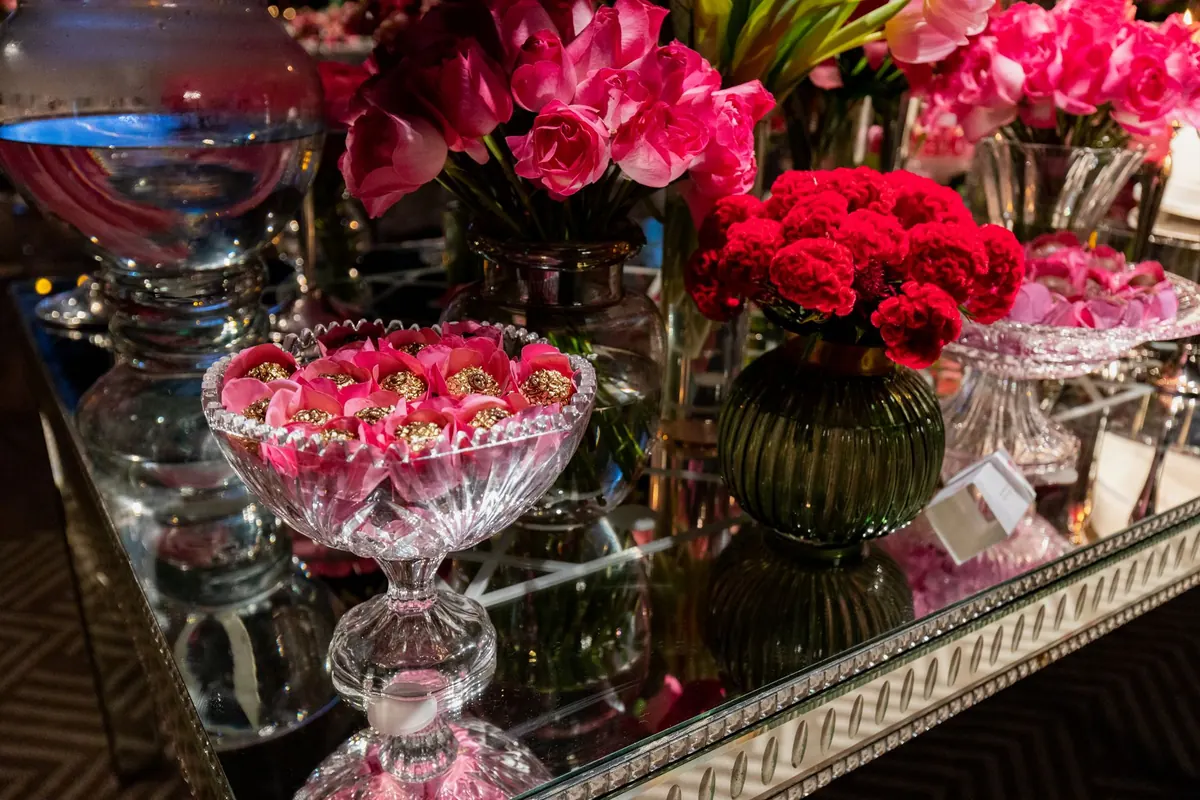
Pressed glass was the Victorian answer to cut glass: the same glitter, a fraction of the price. A gather of hot glass went into a metal mould and a plunger forced it into shape, so a pattern that took a cutter hours could be turned out in minutes. The result filled British dressers, pubs and parlours from the 1830s onwards. It is also still remarkably easy to find at car boot sales — which is exactly why so much of it gets misdated, either hopefully or accidentally.
What Counts as Victorian Pressed Glass
British firms took up pressing in the 1830s, following American manufacturers who had got there first. The trade clustered in a few places: Sowerby at Gateshead, George Davidson at Teams, Henry Greener in Sunderland and later Gateshead, plus Percival Vickers, Molineaux Webb and John Derbyshire around Manchester. Scottish works made pressed ware too.
Dating within the Victorian period is easier if you think in three rough phases.
- 1830s–1850s: heavier and simpler shapes, mostly clear, often made in three-part moulds that leave two vertical seams and a seam across the base.
- 1860s–1880s: the boom years. Better moulds and plungers allowed deep relief, novelty pieces and a huge range of tableware. Most of what a UK collector encounters comes from this stretch.
- 1890s–1901: opalescent and coloured ranges, plus pressed imitations of cut glass, made in volume largely for export.
Nothing was stamped with a year, so dating means combining mark, pattern, colour and condition. Treat any single clue as a hint, not a verdict.
Patterns and What They Suggest
Pattern names are a minefield. Many of the names collectors use — Daisy and Button, Baby Thumbprint, Queen's Crown — are modern conveniences rather than factory names, and the same motif appears across several makers. They are still useful as a shared vocabulary when you are describing a piece to a dealer or comparing it with photographs.
Broadly, faceted and geometric designs belong more to the earlier decades. Naturalistic ferns, flowers, beads, flutes and diamond diapers run right through the middle of the century. Opalescent edges — Davidson's Pearline range from the late 1880s, Sowerby's Moonshine — are a late Victorian taste. Novelty items are their own world: boots, hats, boats, nests, frogs and animals, made in quantity by Sowerby and Greener, and reproduced in quantity ever since.
Motif clues worth remembering
- Fans, shells and scrollwork: common from the 1850s to the 1880s.
- Ferns and lily-of-the-valley: typically 1870s onwards.
- Heavy hobnail or thumbprint: mid-century and endlessly revived later.
- Opalescent rims and edges: usually 1885–1905.
Colour Is a Clue, With Caveats
Clear glass is by far the most common, and Victorian clear often has a faint grey or smoky cast rather than the bright, watery white of modern glass. Amethyst comes in two varieties: deliberately coloured with manganese, or clear glass that contained manganese as a decolouriser and turned purple after decades of sunlight. The second type is genuinely old, though it is often sold as though the colour were original.
Other colours to know: cobalt blue, deep green and canary yellow (both usually from uranium), ruby, opaque white often called opaline or milk glass, and black, which appears from around the 1870s imitating jet. Turquoise and pale blue are less common and more often reproduced.
A small UV torch is the collector's best cheap tool. Uranium glass glows bright green under 365nm light. Be careful what you conclude from this: modern reproductions use uranium too, so a glow proves uranium is present, not that the piece is Victorian.
Marks: The Registration Diamond and Its Limits
Most Victorian pressed glass is unmarked. When you do find something, it is usually one of these.
- A diamond-shaped registration mark: used from 1842 to 1883, with numerals and letters around the diamond giving day, month, year and class. These can be decoded against the Board of Trade registers, which are held at the National Archives and partly indexed online.
- An "Rd" number: from 1884 onwards, registered designs were given a plain number instead. Same registers, same principle.
- A maker's name or initials pressed into the base: Sowerby, Davidson and Greener all did this at times. Helpful, but the absence of a mark tells you nothing at all.
- "England" or "Foreign": usually indicates a piece made for export after 1891, when country-of-origin marking became a requirement for goods entering the United States.
One warning: a registration date tells you when the design was registered, not when your particular piece was made. Popular designs stayed in production for years, and moulds were sold on.
Wear: The Most Honest Evidence of Age
A Victorian piece has been used for well over a century, and that shows. Check the following, ideally in daylight and with a loupe.
- The foot rim: a fine, slightly grey band of abrasion, sometimes with a dulled "slick" patch where it has been slid across a shelf.
- The rim and any high points: small nibbles, flea bites and softened edges.
- The pattern: the highest parts slightly rubbed and less brilliant than the recesses.
- The inside: a faint cloudiness and fine scratching, not a mirror finish.
Faked wear tends to look uniform and deliberate. Real wear is patchy and follows the shape of the object.
Reproductions and the Red Flags
Copies of Victorian patterns were made in the 1930s, again in the 1960s and 1970s, and continue to be made abroad. Watch for crisp, evenly raised mould seams running over the rim, glass with no bubbles, striations or tiny ash specks at all, and colour that looks flat rather than deep. Pattern detail that is either soapy-soft or mechanically sharp is another clue, as is a surface with no base wear whatsoever.
Repairs are a separate problem. Some adhesives and resins glow milky under UV light, and a rim that has been ground down to hide a chip often feels sharper and thinner than its neighbours. Run a fingertip around the whole rim before you buy.
Buying With Your Eyes Open
Carry a loupe and a small UV torch. Buy from dealers who will talk you through a piece and let you handle it, and treat online listings with no base photograph as a gamble. Prices for common clear pressed glass are modest, and rarity claims should be treated sceptically unless the seller can point to the mark or the pattern reference. For anything expensive, a specialist dealer or a regional auction house will usually give a view for a small fee.
Once it is home, wash pressed glass by hand in warm water with a little mild detergent and dry it straight away. Avoid dishwashers and sudden temperature changes, which will turn a hairline into a break. If you plan to use old glass for food or drink, bear in mind that much Victorian glass is lead-based; keep acidic drinks out of it and take advice if you are unsure. And remember the pleasure of the thing: a Victorian butter dish or celery vase that has survived 140 years of clumsy hands deserves a place on the shelf whether or not it turns out to be Sowerby.
Photo: Matheus Bertelli / Pexels